
Инфинитив в английском языке — что это такое? Всё про неопределённую форму глагола
Инфинитив — это начальная форма глагола. Если говорить простым языком, инфинитив — это глагол, который отвечает на вопрос «что делать?» и на конце этого глагола в русском языке всегда стоит мягкий знак. В английском языке мягкого знака нет, вместо него в английском языке используют частицу «to» и ставят её перед глаголом.
 Запомните простое правило инфинитива: «мягкий знак» в конце глагола в русском языке, это «to» перед глаголом в английском языке.
Например: купить — to buy
В английском языке инфинитив используют в таких же случаях, что и в русском. Если в русском глагол оканчивается на «-ть» то в английском поставьте перед ним «to».
Однако существуют глаголы, после которых ставим инфинитив без «tо», при этом в русском языке он всё равно будет с «-ть» на конце.
| Инфинитив с «to» |
| — После глаголов: be, agree, appear, decide, expect, hope, plan, promise, refuse, pretend, ask, dare, invite, want, tend, fail, help, remind, teach, warn, catch, find, expect, threaten, offer, arrange, order, hesitate, remember*, regret*, stop*, try*, like*, hate*, etc. * после этих глаголов может быть как инфинитив, так и герундий (gerund) Our plan was to buy a lorry. People tend to overeat when they are stressed. He stopped to tie his shoelace.— После некоторых прилагательных: happy, glad, sorry, important, necessary, difficult, possible, impossible, eager, anxious, reluctant, willing, annoyed, lucky, fortunate, mean, clever, kind, silly, etc.: It is impossible to predict the future. He was glad to hear that. — После: прилагательное + for — После: too / enough — После: would like / would love / would / prefer — После: be the first/second/next/last/best — После only (неудовлетворительный результат) — После: it is + прилагательное + of you («это так… с твоей стороны…», «было … с его стороны…») — После слов advice, allow, encourage, permit, recommend, если после них идет дополнение или они сами в пассивном залоге: — После so + прилагательное + as — После: For him / For her / For them / For Tom / etc. — После in order to / so as to (для того чтобы) — После make, let, see, hear, feel, если они в пассивном залоге — В устойчивых выражениях: to tell the truth; to begin with; to say the least; to put it mildly; To cut a long story short; to say nothing of; to crown it all; to make the things still worth; etc. — После всех вопросительных слов кроме «why» |
| Инфинитив без «to» |
| — После модальных глаголов: can, must, will, should, may. You must read the book, it’s captivating.— После: would rather / would sooner (предпочёл бы) / had better (лучше бы) / cannot but (не могу не) You had better see a doctor. — После глаголов: make, let, see, hear, feel, если после них идёт дополнение. — После глаголов: see, hear, watch, feel, observe, когда необходимо показать законченное действие. — После but, expect, than, rather than. — После вопросительного слова «Why» |
Для чего нужен перфектный инфинитив
Существует 4 формы инфинитива в активном залоге и 2 формы в пассивном залоге. Мы уже знаем, что у инфинитива нет времени, и используется он после определенных глаголов, например, модальных: can, must, may, should.
Рассмотрим все формы инфинитива на примере модальных глаголов. Начнём с активного залога.
to do — обычный инфинитив, для настоящего и будущего времён
to be doing — континьюсный инфинитив, для настоящего и будущего в процессе
to have done — перфектный, для прошедших времён
to have been doing — перфектный континьюсный, для прошедших времен в процессе
Вместо слова «do» подставляем любой глагол, который нам нужен.
1. Он должно быть ходит в спортзал.
Должно — must, ходит в спортзал ‘вообще’ — это настоящее время. Инфинитив для настоящего и будущего времени — обычный «to do»
He must go to the gym.
2. Они должно быть спят.
«Спят» в данный момент — это время present continuous. Для настоящего и будущего времён в continuous мы используем континьюсный инфинитив.
They must be sleeping.
3. Ты должно быть оставил её в машине.
«Оставил» — это прошедшее время. Для прошедших времён мы используем перфектный инфинитив.
You must have left it in the car.
4. Они должно быть ждали нас там.
«Ждали» в прошлом и действие длилось некоторое время. Для этого мы используем перфектный континьюсный инфинитив.
They must have been waiting for us there.
Что касается инфинитива в пассивном залоге, его существует только две формы (для continuous не существует)
to be done — для всех настоящих и будущих времён
to have been done — для всех прошедших времён.
1. Его следует наказать.
«Следует» — сейчас или в будущем. Значит используем Инфинитив для настоящих и будущих времён.
He should be punished.
2. Его следовало наказать.
«Следовало» — в прошлом. Значит используем инфинитив для прошедших времён. Перфектный инфинитив после «should» показывает, что действие было желательно, но не было совершено.
He should have been punished.
Подробнее разобраться с инфинитивом после should вы сможете в этом видео
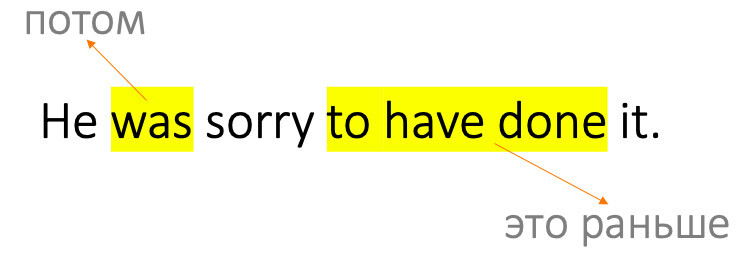
Кроме того, перфектный инфинитив нужен для того чтобы показать, что действие глагола в инфинитиве произошло раньше, чем действие глагола, который изменяется по временам.
Например: He was sorry to have done it.
Конструкции которые содержат инфинитив
- prefer doing to doing. Предпочитаю делать что-то, чем что-то (имеется ввиду «вообще») (В русском инфинитив, в английском герундий)
I prefer swimming to jogging - prefer to do rather than do. Предпочитаю делать что-то, чем что-то (тоже «вообще», совпадает с русским переводом)
I prefer to eat out rather than cook. - would prefer to do rather than do. Предпочла бы сделать что-то, чем что-то.
Tonight I would prefer to cook rather than eat out. - would rather/sooner do than do. Предпочла бы сделать что-то чем что-то.
- for there to be.
It is important for there to be a lot of parking spaces. - The Complex Object.
I want/wish/desire/mean/urge/intend/know/think/
consider/believe/find/ you to do
- The Complex Subject
Something/somebody is seen/noticed/observed/thought/expected/supposed/known/said/ to do something.
He is expected to arrive tomorrow. Ожидают, что он приедет завтра.
Упражнения
Скачать упражнения и ответы → exercises pdf
Упражнение 1. Вставьте «to» где необходимо.
1. I would rather … stay at home today.
2. They wanted … invite her to the party but could’t … find her phone number.
3. May I … have a can of cola?
4. They decided … come and see him.
5. I would sooner … die than … call him.
6. They are thought … have left for Madrid.
7. You should … have called me fist.
8. What made you … think so?
9. They were made … apologise to her.
10. She wants us … help her.
11. They couldn’t decide where … go.
12. He made me … tell a lie.
13. He is saving up in order … buy a bicycle.
14. The party was in full swing. We were reluctant … leave it.
15. He is too lazy … read.
16. It is difficult … tell margarine from butter.
17. I had nothing … say to him.
18. Why … go there if we can … here?
19. They are clever enough … pass the exam.
20. It was so kind of him … lend me his car.
21. I was sorry … hear that she had split up with her boyfriend.
22. My roommate plans … set up his own business after he graduates.
23. Everybody knows him … be right.
24. I watched him … put the papers into his bag.
25. He was the last … leave the office.
26. It is important for there … be enough seats for everyone.
Упражнение 2. Исправте ошибки.
1. He felt his hands to tremble with excitement.
2. I must to visit my parents. They are waiting for me.
3. She made them to take the medicine.
4. She was seen buy drugs at the chemist’s
5. I saw him to dance.
6. She must to be Ivan’s daughter. She has a striking resemblance to him.
7. She was too busy meet her friends.
8. It is difficult pretend not to know.
9. He is said left the city after dark.
10. They must knew something was wrong.
11. We believe them help us.
12. His wife doesn’t allow him smoke indoors.
13. We’ve never heard her to sing.
14. I would prefer go to the party rather than stay home.
15. He was the first come to the party.
16. My brother taught me play the guitar.
18. Nobody saw me to take the papers.
ANSWERS
Упражнение 1.
1. — ;
2. to; — ;
3. -;
4. to;
5. — ; — ;
6. to;
7.- ;
8. -;
9. to;
10. to;
11. to;
12. — ;
13. to;
14. to;
15. to;
16. to;
17. to;
18. — ;
19. to;
20. to;
21. to;
22. to;
23. to;
24. — ;
25. to;
26. to;
Упражнение 2.
1. He felt his hands tremble with excitement.
2. I must visit my parents. They are waiting for me.
3. She made them take the medicine.
4. She was seen to buy drugs at the chemist’s.
5. I saw him dance.
6. She must be Ivan’s daughter. She has a striking resemblance to him.
7. She was too busy to meet her friends.
8. It is difficult to pretend not to know.
9. He is said to left the city after dark.
10. They must have known something was wrong.
11. We believe them to help us.
12. His wife doesn’t allow him to smoke indoors.
13. We’ve never heard her sing.
14. I would prefer to go to the party rather than stay home.
15. He was the first to come to the party.
16. My brother taught me to play the guitar.
18. Nobody saw me take the papers.